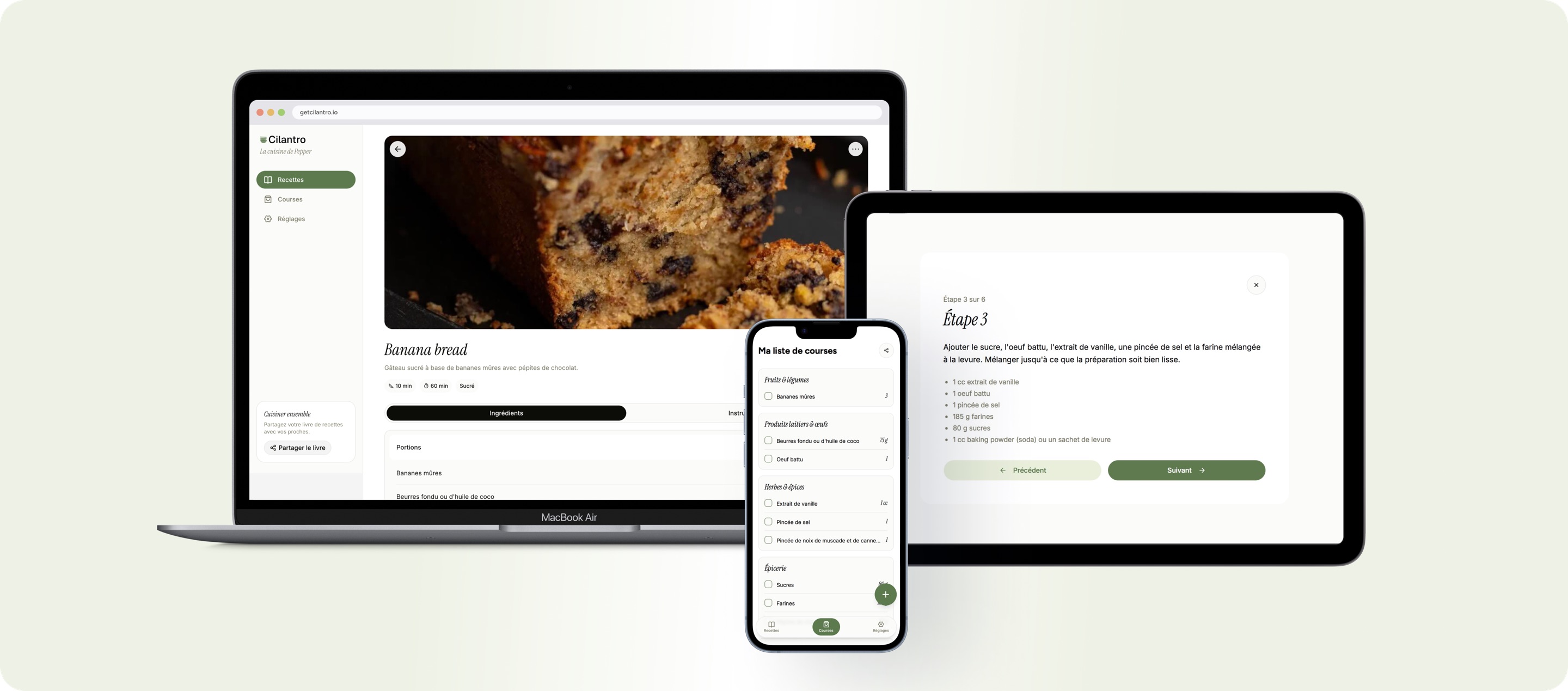
Cilantro
Your cooking companion
Product Designer & Product Builder
Design, product management and AI-assisted development
April 2026 to today / France
Official launch in July 2026
Stack: Next.js, React, TypeScript, Firebase, Claude API (Anthropic), Vercel
The project in one sentence
Cilantro is a digital cookbook that replaces the screenshot, the lost link and the plastic binder. Recipes can be imported manually or from a URL, a photo or a PDF, turned into a shareable shopping list, or followed step by step in cooking mode.
Every recipe in one place
+ Context
A person's recipes can be scattered across formats: websites, screenshots, physical or handwritten books, PDFs, social media (Instagram, TikTok etc). My analysis shows that no app lets you bring them together, for two reasons:
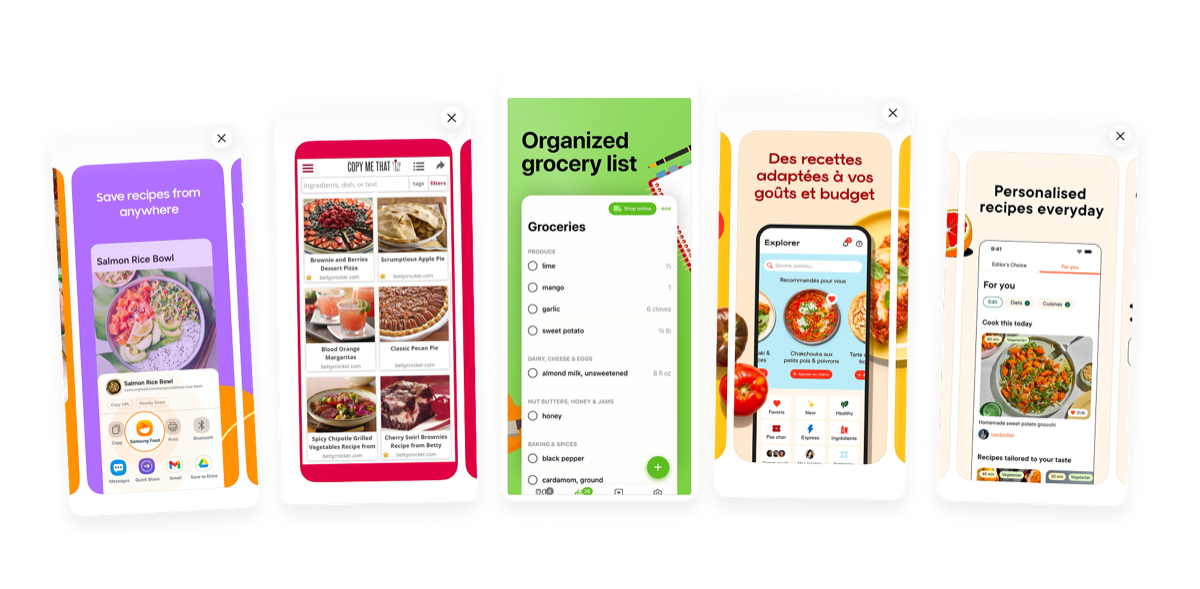
- Closed catalogue: recipes from elsewhere cannot be added (Marmiton)
- Open notebook: your recipes are accepted, but through manual entry or URL only (Mealime, Kitchen Stories)
+ Issues
- No app covers the full range of real-world sources
- An empty cookbook has no value
+ Goals
- Accept any source, so that Cilantro can become the single cookbook
- Make adding recipes fast and easy enough that filling your book never feels like a project
+ Process
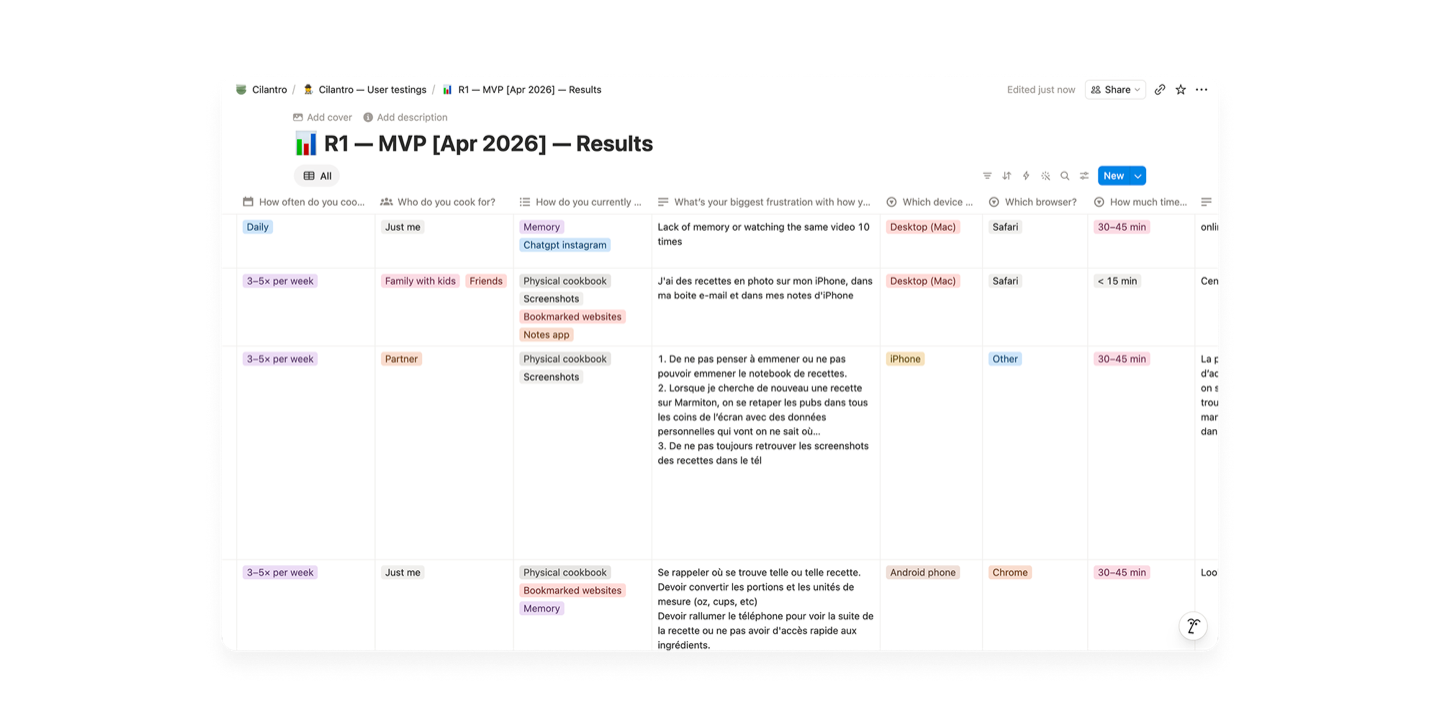
- Identifying friction points through user interviews
- Benchmark and competitive analysis
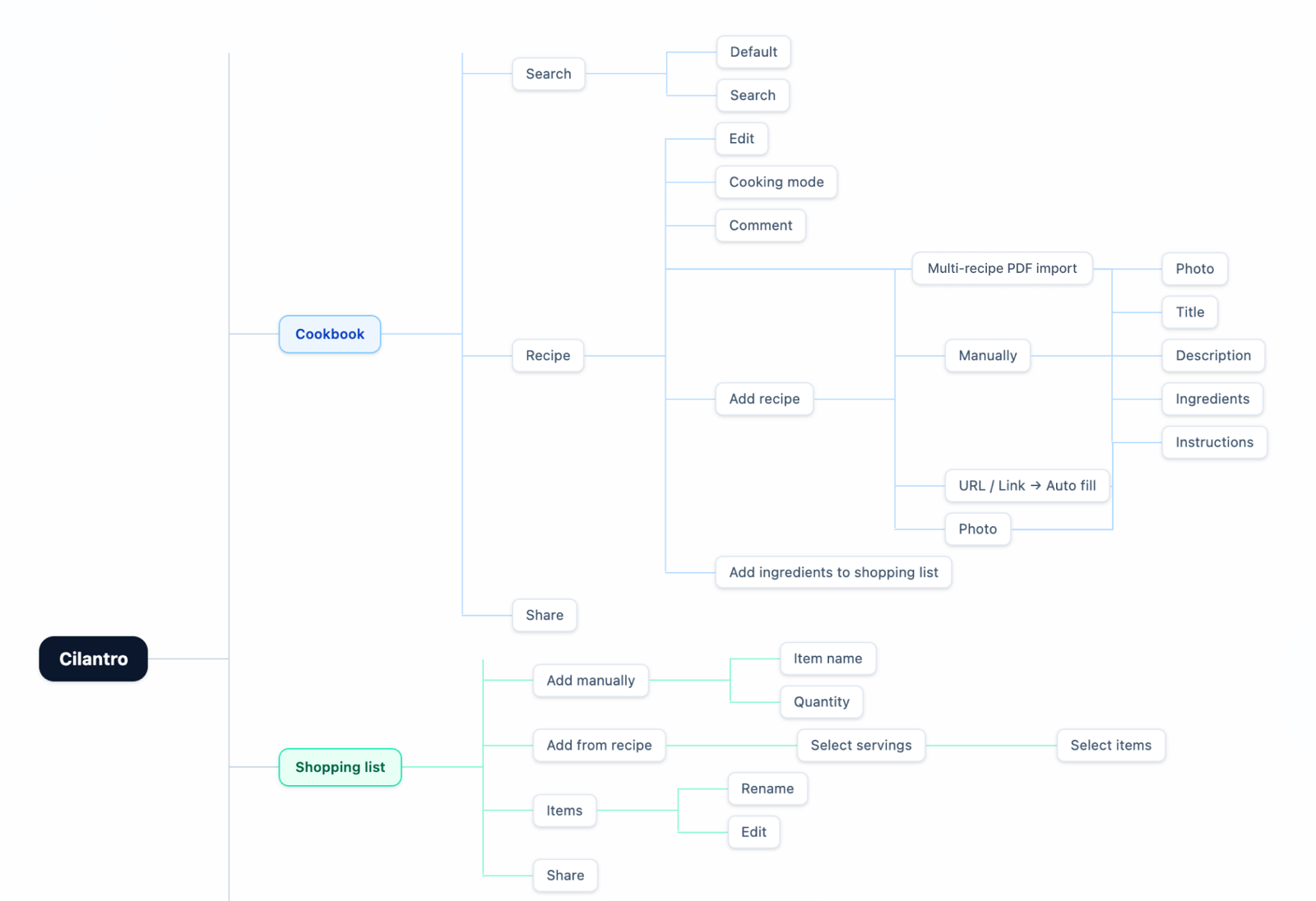
- UX flows and UI design, with particular attention to the review screen
- Choosing a language model (Claude)
- Building the import options incrementally: URL and photo (April), multi-recipe PDF (July)
+ Solutions
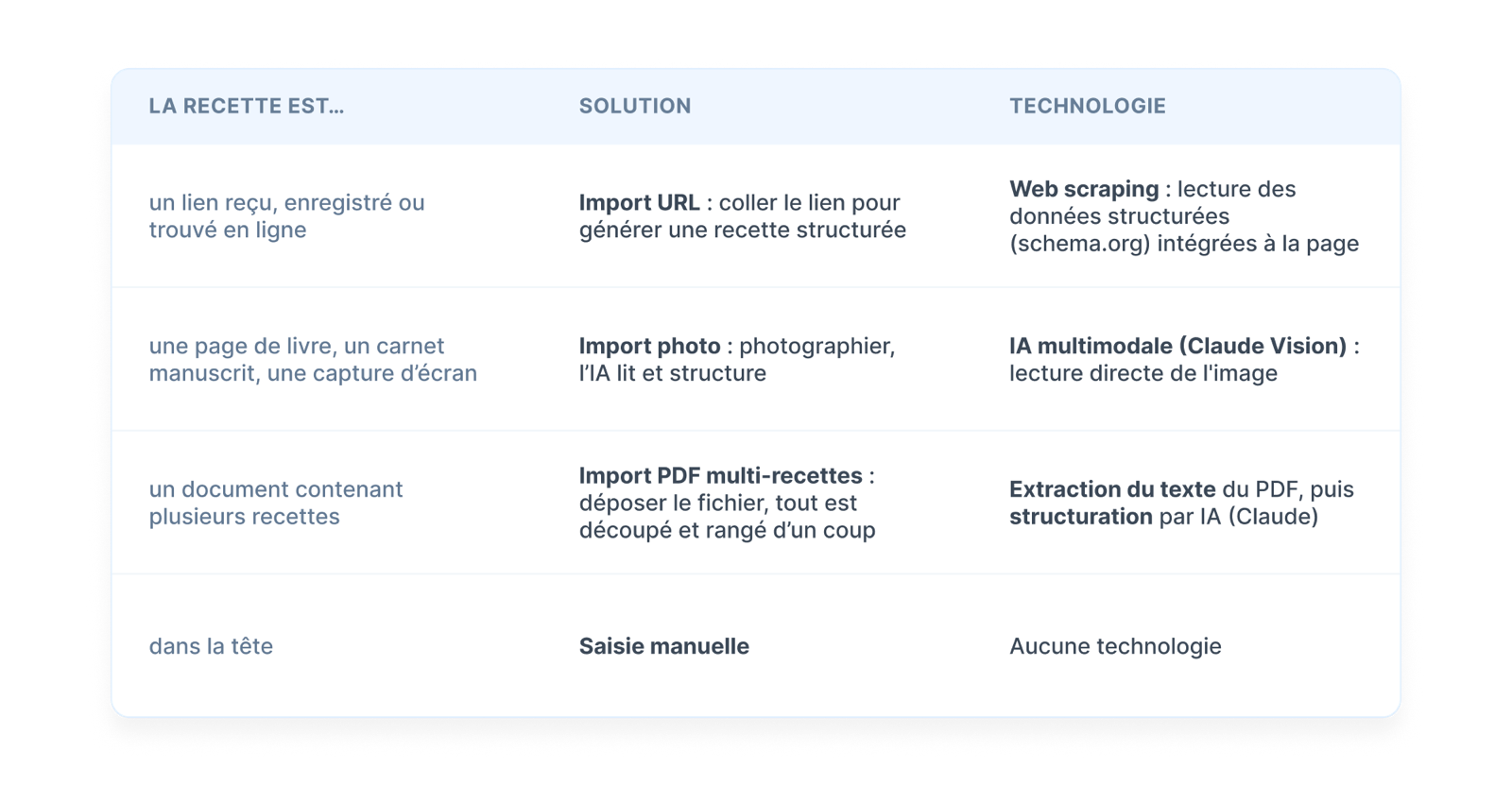
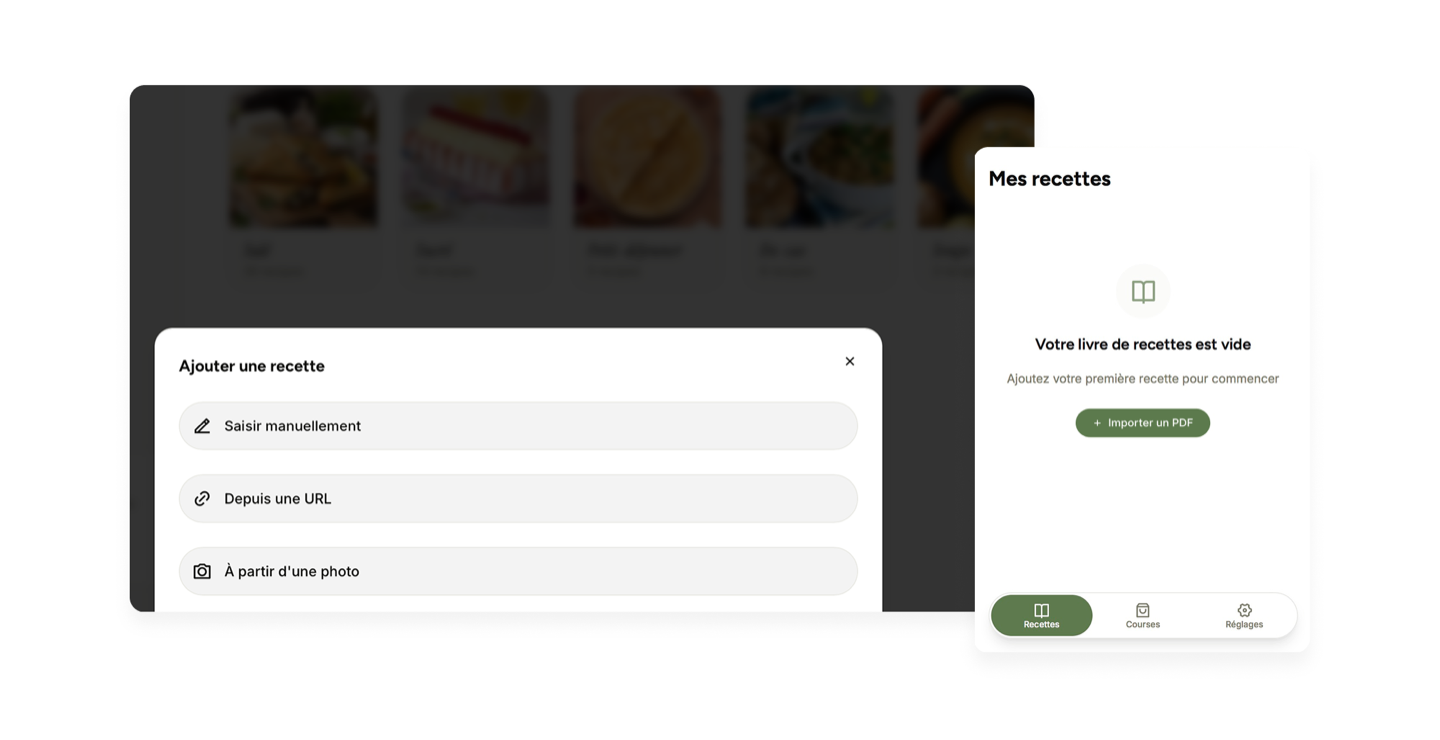
- Four import options, covering as many real scenarios as possible
- A single review screen shared by every import option — essential for checking and adjusting the content when needed
// Product decision: multi-recipe PDF import is only offered for empty cookbooks. It is the most expensive option in the app, so I decided to surface it only to new users, as they discover the product.
+ Results
- Four import modes in production, covering the four real sources identified in research
- Cost per photo import reduced by 45% after optimising the prompt and the size of the image sent
- Per-user usage caps built in from the start (a bounded monthly budget per feature): the economic constraint treated as a design constraint, not an infrastructure problem
+ Learnings
- My first AI integration in a product: I had never called an API before. I discovered a technology with its own constraints — reliability, errors, cost per call — and I now understand much better when and how to use it
- AI builds fast, it does not design: it shipped some features in minutes, but without a designer's eye and experience, the experience simply would not exist
- My technical limits are still very real: an OAuth bug took me hours to fix, not because it was hard, but because I lacked the basics to understand what I was reading
From shopping to cooking
+ Context
Saving a recipe only happens once. For Cilantro to be used day to day, it has to earn its place at two key moments: doing the shopping, and cooking.
+ Issues
- Ingredient lists as written in recipes are not necessarily suited to shopping
- In the kitchen, your hands are busy. Reading a dense block of text and hunting for ingredients and steps on a website or in a book is painful
+ Goals
- Generate a shopping list automatically from a selection of recipes
- Design a readable cooking mode that follows your progress without fiddling
+ Solutions
Shopping list
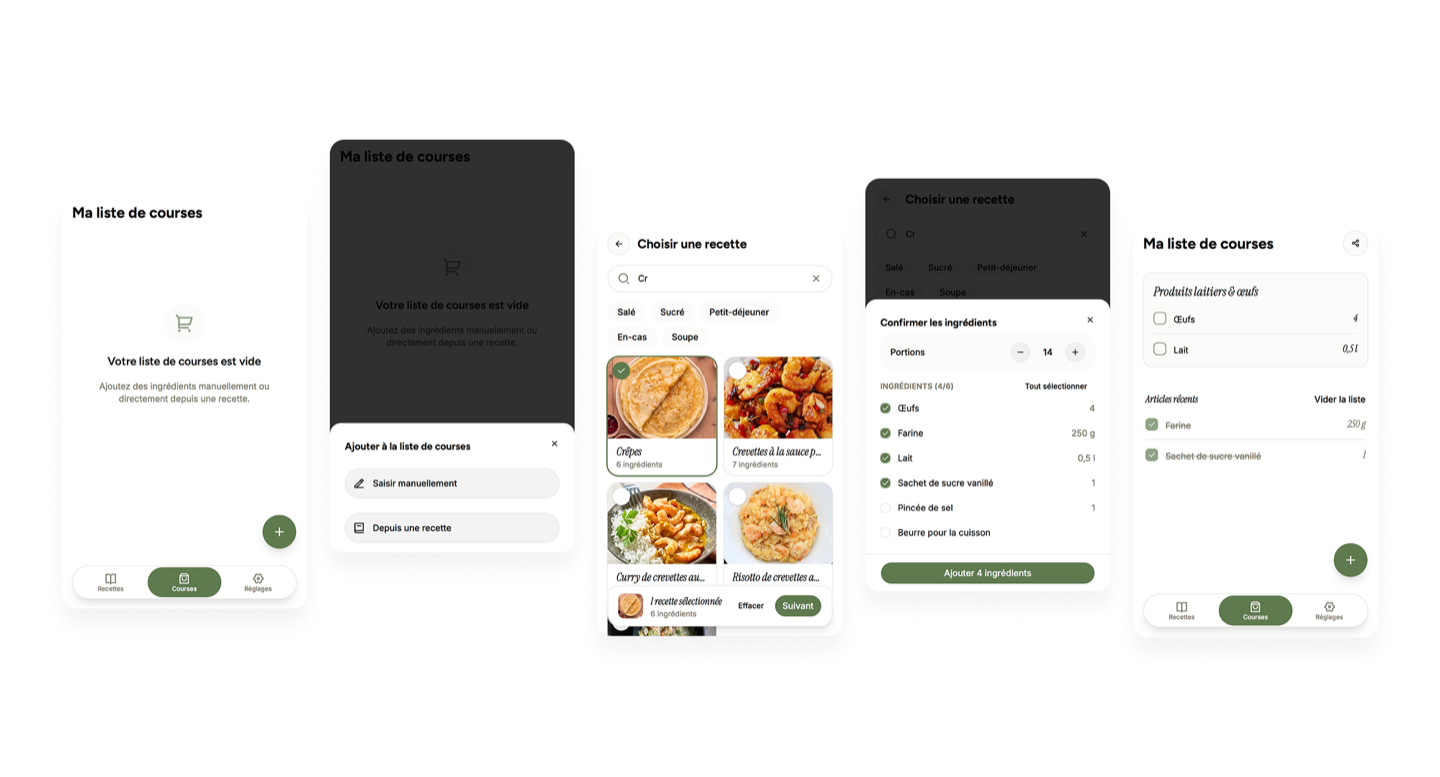
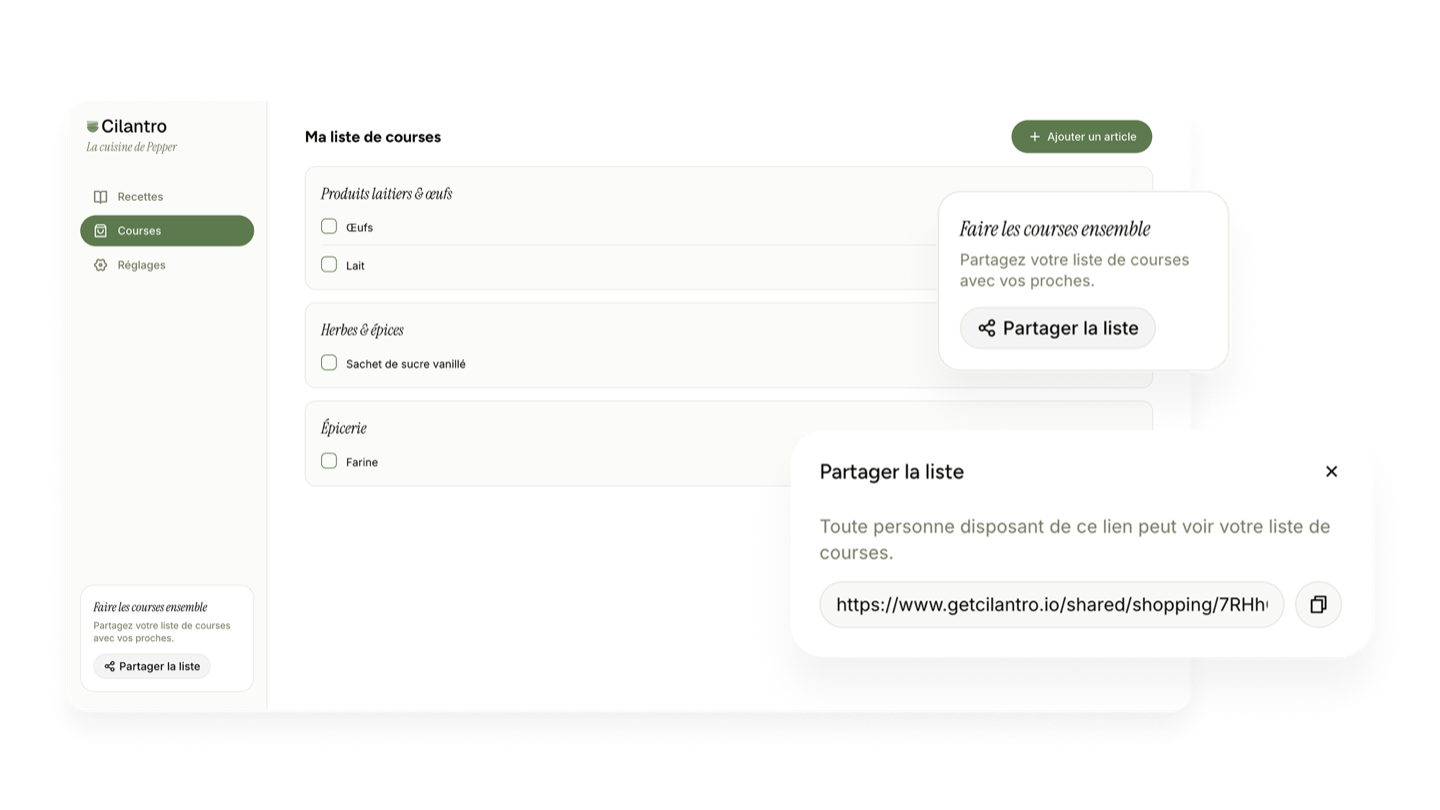
- Generated from a selection of recipes: identical ingredients merged, sorted by aisle, manual additions, and sharing with no account needed to tick items off
- Serving adjustment: every quantity recalculated, with plurals handled properly (1 slice / 2 slices)
Cooking mode
- One step per screen, with the ingredients for the current step highlighted automatically
- Quantities tracked as you cook: if a recipe uses 200g of flour in two goes, step 2 shows what is left, not the total
+ Results
- A complete experience in production: import → cookbook → shopping → cooking mode
- A shopping list the recipient can open without an account, which brings in new users
+ Learnings
- Physical constraints are design constraints: cooking mode is a different screen with a different hierarchy, built for the context it is used in
- Merging and grammar are product work: adding two ingredients together, getting a plural right, picking the correct unit — that is where the difference between a prototype and a product is decided
From prototype to product
+ Context
By mid-April the app already worked, but that did not make it publishable. Getting from experiment to production took up most of the following months, and it is the least visible part of the work.
+ Issues
- UI/UX in need of work before it could ship
- Compliance with privacy and data protection law
- No way to gather feedback other than asking for it directly
+ Goals
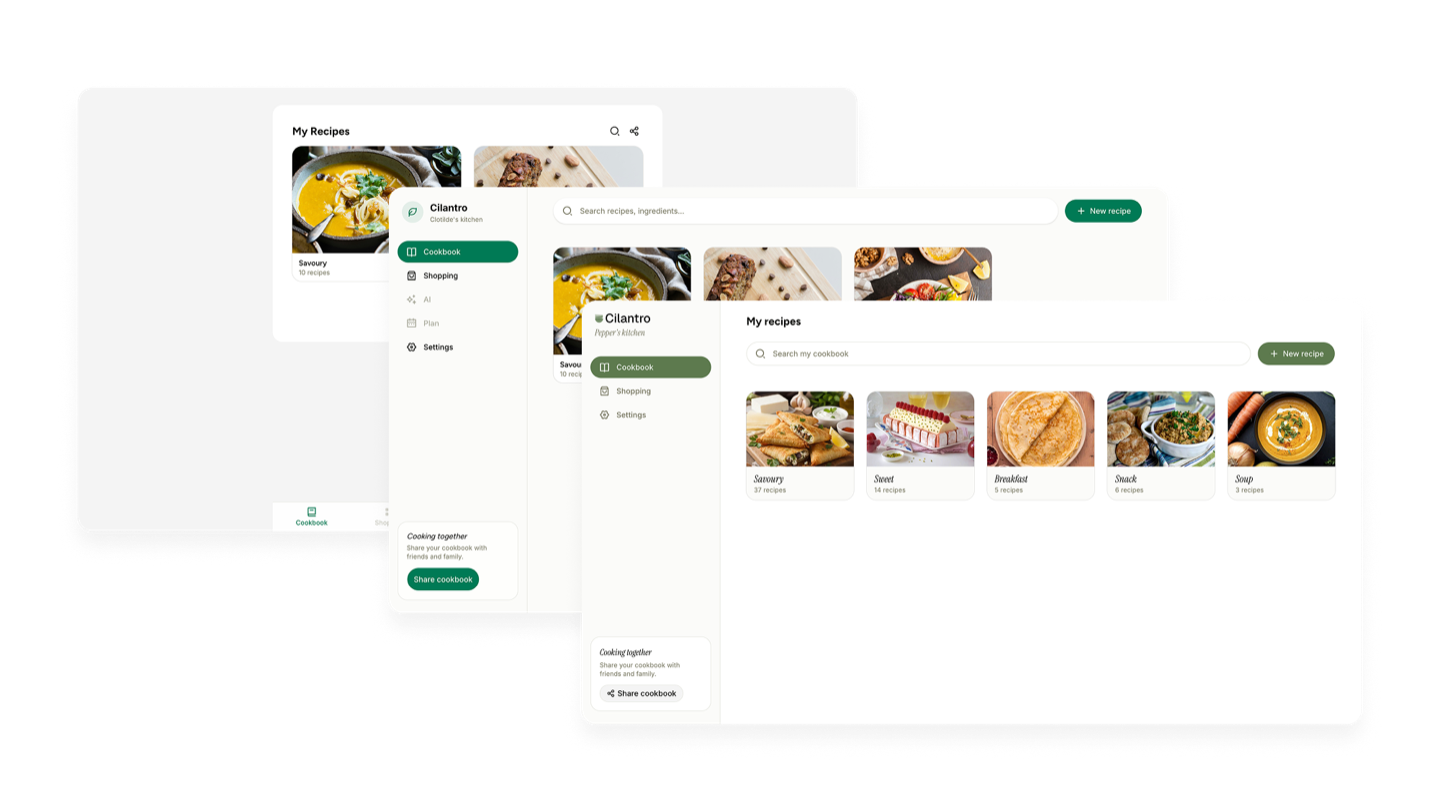
- Improve the interface design across every device
- Deliver a legal and technical framework solid enough to open the app to people I don't know
- Make user feedback systematic instead of hand-collected
+ Solutions
Prepare and run the two launch plans:
Plan A
- Review user feedback and act on it in priority order
- Finalise Cilantro's visual identity and improve the Shadcn-based Design System
- Fix the remaining blocking bugs
- Run the security tests
Plan B
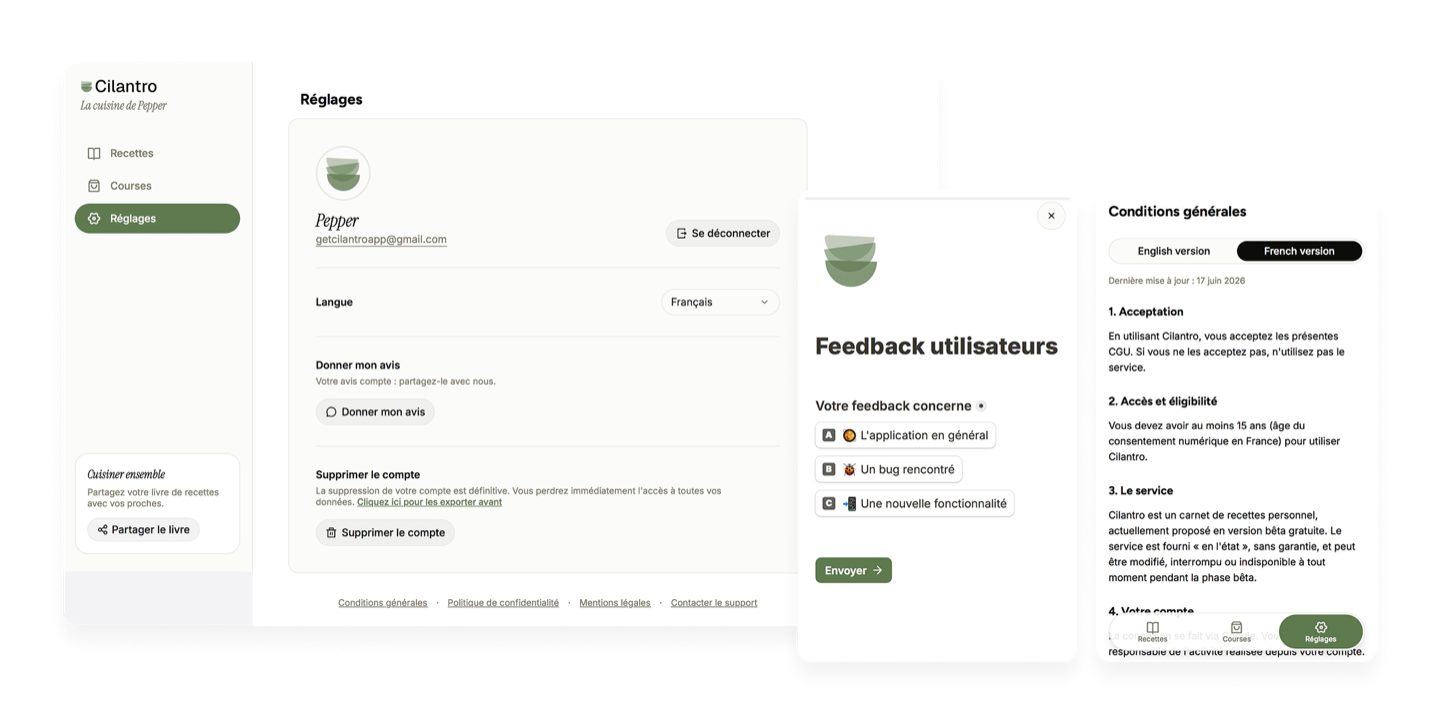
- Compliant legal pages, plus account deletion and data export
- A feedback tool built in
- EN/FR localisation across every screen
// Product decision: user-created content is never machine-translated. The interface gets translated, people's recipes never do.
+ Results
- 216 commits in 3 months: from a blank page to an app in production — bilingual, compliant, and tested by real users
- Two rounds of user testing, with fixes prioritised and shipped
- Continuously deployed, with a test branch kept separate from production
+ Learnings
- Across three months, the share of time spent on legal, localisation and the design system far exceeded the time spent building features
- Building it yourself changes how you design: carrying the implementation cost of every idea pushes you to decide, and to cut scope
- Leaving myself room to decide later: the feature flags I put in place let me launch without multi-recipe PDF import, test it in real conditions, and open it up once I judged it ready
What's next
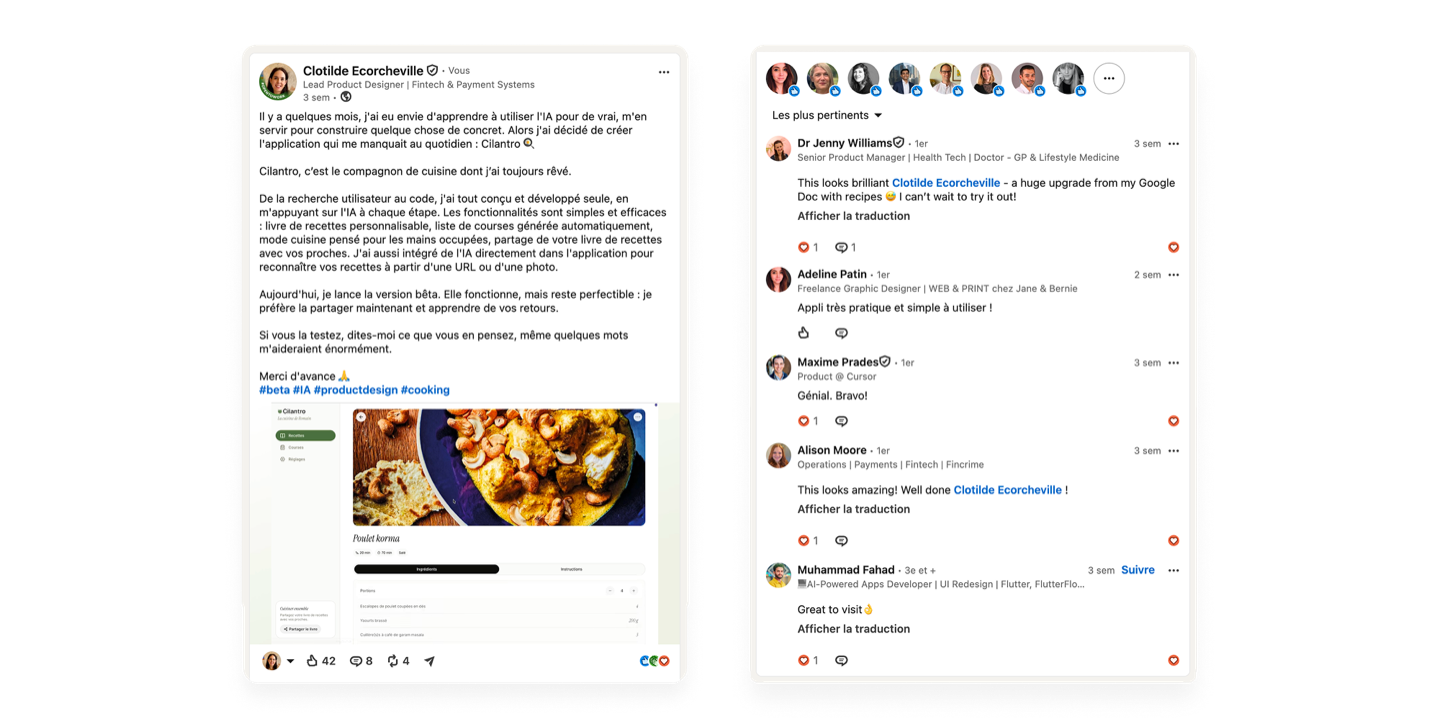
Cilantro is not a finished project — it keeps evolving with its users. The current roadmap draws on two sources: the priorities voiced during user testing before launch, and what the beta testers have said since.
- Import from a video (Instagram, TikTok): one of the most frequently mentioned recipe sources
- An AI suggestion agent, able to propose recipes based on what is in each person's own cookbook
- Meal planning, to organise the week directly from Cilantro
- A native mobile app, to take over from the web app